Challenging Vector Problem 2

vector

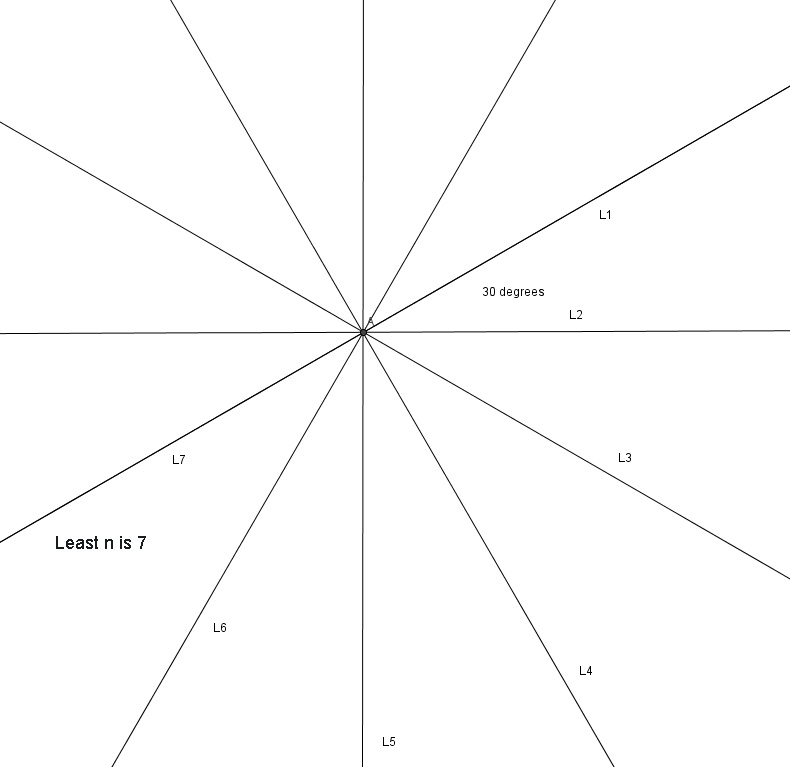
Answer: 7

Solution

vector a1

vector diag

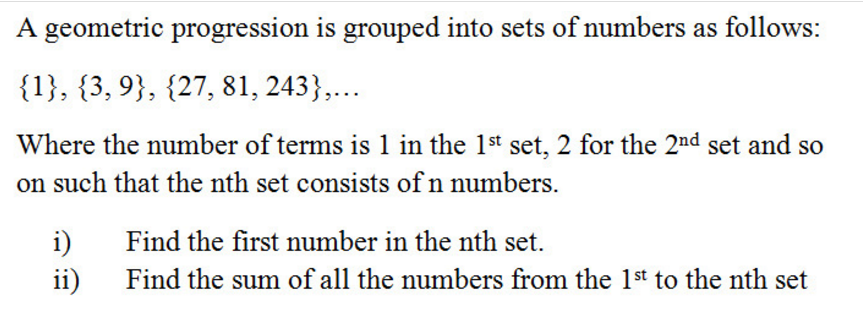
Challenging APGP Problem 3

1

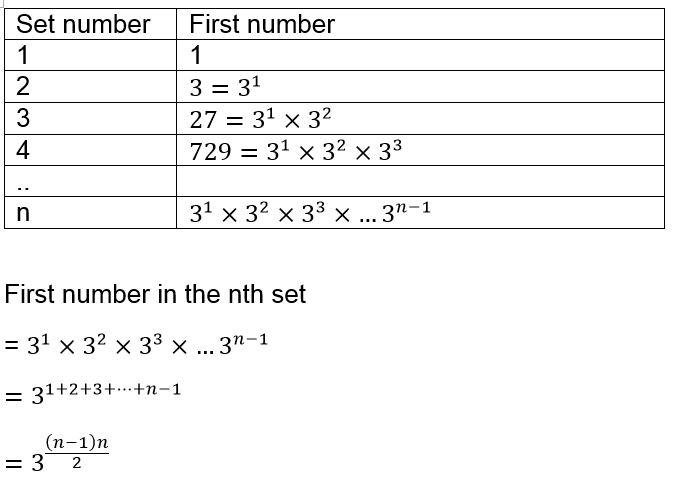
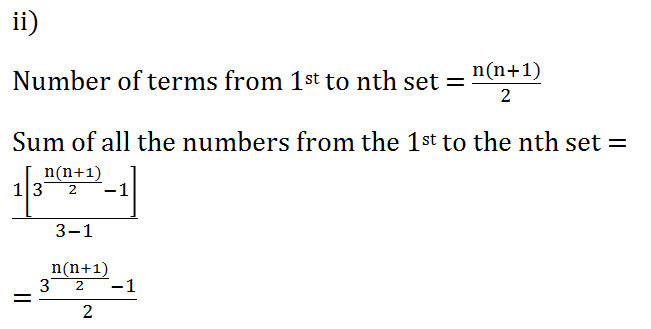
Solution

2

gp2

Challenging Binomial expansion problem

binomial

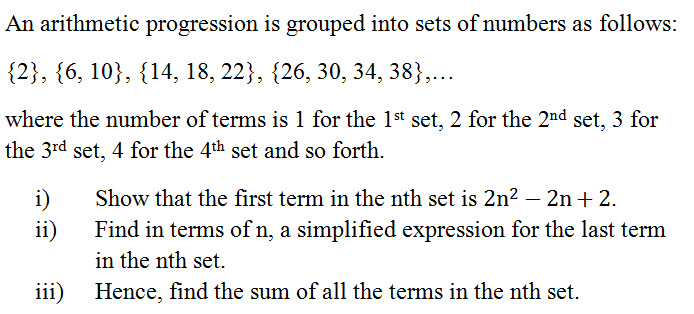
Challenging APGP Problem 2

ap2

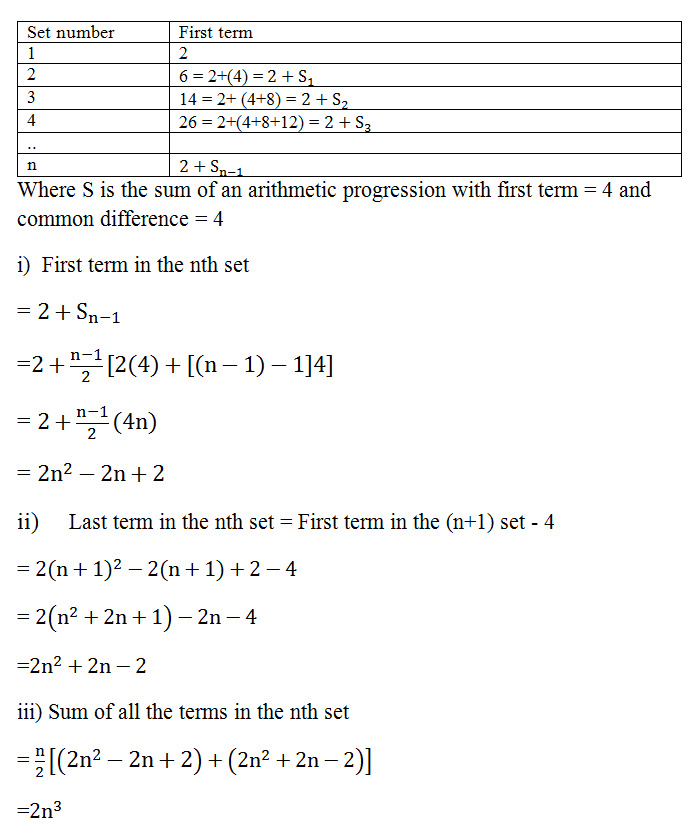
Solution

apgp sol2

Reverse graph transformation

This question was posted by a student.

” What is the series of transformation from f(3-x/2) to f(x)?”

Here are 3 different methods to solve it.

Method 1

Let f(3-x/2) = g(x)

Let u=3-x/2

x= -2u+6

f(u)=g(-2u+6)

f(x)=g(-2x+6)

Therefore, the sequence of transformation is

Translate 6 units in the negative X direction.

Scale by a factor of 1/2 parallel to the X-axis.

Reflect about the Y-axis

Method 2a

Apply f(-2x) to f(3-0.5x).

f(-2x) = f[3-0.5(-2x)] = f(x+3)

ie. Scale parallel to the X axis by a factor of 0.5. Then reflect about the Y axis

Apply f(x-3) to f(x+3) to get f(x)

ie. Translate 3 units in the positive X direction

Method 2b

Apply f(x+6) to f(3-0.5x) to get f(-0.5x)

ie. Translate 6 units in the negative X direction.

Apply f(-2x) to f(-0.5x) = f(x)

ie. Scale parallel to the X axis by a factor of 0.5. Then reflect about the Y axis.

Method 3

f(3-x/2) is transforming f(x) by

A:Translate 3 units in the negative X direction

B: Scale by a factor of 2 parallel to the X axis

C: Reflect about Y axis.

So to get back f(x), we reverse the transformation:

C’: Reflect about Y axis

B’: Scale by a factor of 1/2 parallel to the X-axis.

A’: Translate 3 units in the positive X direction

Comments

Method 1 and 2 are the forward approach. Method 3 is the reverse approach.

Method 1 is the preferred approach as it is easier and faster.

Preparing for exams

1. For students who have enough time, start by revising and practising questions by topic. Do basic level questions for all topics. Then do intermediate questions (slightly harder than alevel standard). If you are running out of time, go straight to doing yearly paper. Doing yearly paper and revise weak topics is the fastest way to improve.

2. For students preparing for their school internal exams, practise past year exam paper from their school, starting from the most recent. It is important to practice past year paper from your school as each school has its style of questions. For the first paper, you can refer to your notes and formulas. For any question you get incorrect, practise at least 2 more similar questions in that topic.

For subsequent paper, attempt only with the formula list MF 26 under timing. Keep practising until you can score 10% above your desired grade.

3. For students taking A level , do past 5 years alevel paper and prelim papers from YIJC, JPJC, TMJC, VJC, EJC.

Do paper 1 and paper 2 in 3 hours each, with only MF 26. Then revise weak topics (questions that you got wrong in the paper). Repeat the cycle


Definite Integrals involving Modulus

Definite integrals involving modulus looks complicated but can be easily evaluated using a standard approach. See the following examples.

definite integral 1

definite integral 2

Using Functions to explain Graph Transformations

Transformations of graph can be written in terms of functions, so we can see the sequence of transformations.

Example 1

transformed

Example 2

transformed 1

Challenging Probability problem 2

Problem

Vegetarian club consists of 2 married couples and 8 singles. The club is to select a delegation of 4 members to participate in an overseas conference. Find the probability that the delegation contains exactly one married couple.

Answer: 8/45

Solution

Case 1: 1 couple + 1 of the other couple + 1 single

(2 couples choose 1 couple) X (2 choose 1 from the other couple) X (8 singles choose 1) = 32

Case 2: 1 couple and 2 singles

(2 couples choose 1 couple) X (8 singles choose 2) = 56

No restrictions  = 12 C 4 = 495

Probability = (32+56) / 495 = 8/45

Challenging Sequences and Series problem 2

seq

seq2