Sketching graphs of polynomial functions

Sketching graphs of polynomial functions are useful in graphing techniques, and solving inequalities.

Steps

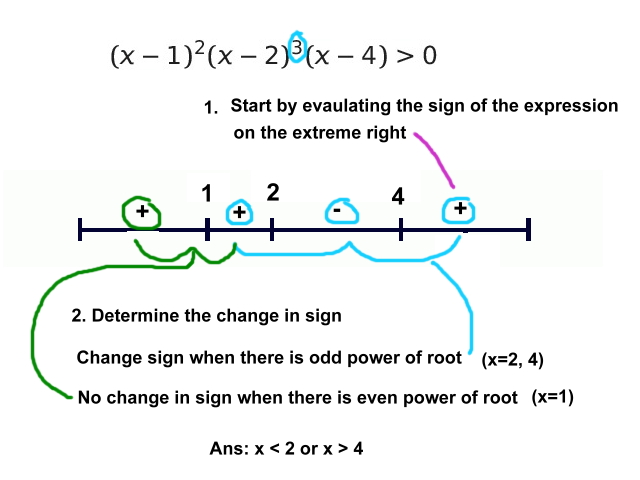
1. First mark down the roots of the polynomial function.

2. Decide how the tail ends behave, whether it is above or below the X axis. This can be determined from the coef of the highest power. For instance, if the polynomial is of degree 6 and the coef of the highest power is positive, then when X approaches either positive or negative infinity, the function approaches positive infinity, so the tail ends are above the X axis.

3. Determine how the function behaves at the roots. When there are 3 or more odd number of roots at the same point, there is a point of inflexion at the root. When there are 2 or more even number of roots at the same  point, there is a minimum or maximum point at the root.

Example 1

graph 1

Example 2


2

All about TI 84 Plus graphing calculators

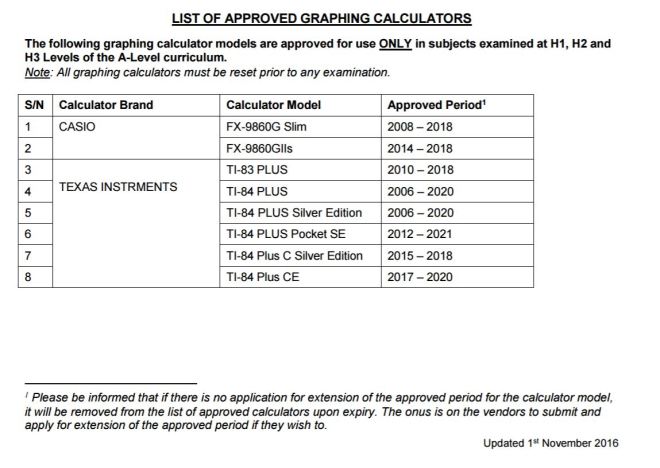
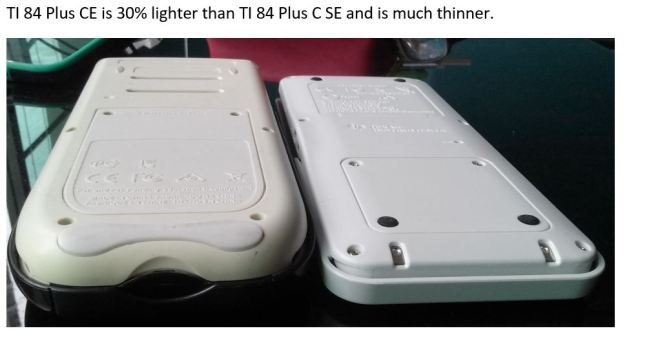
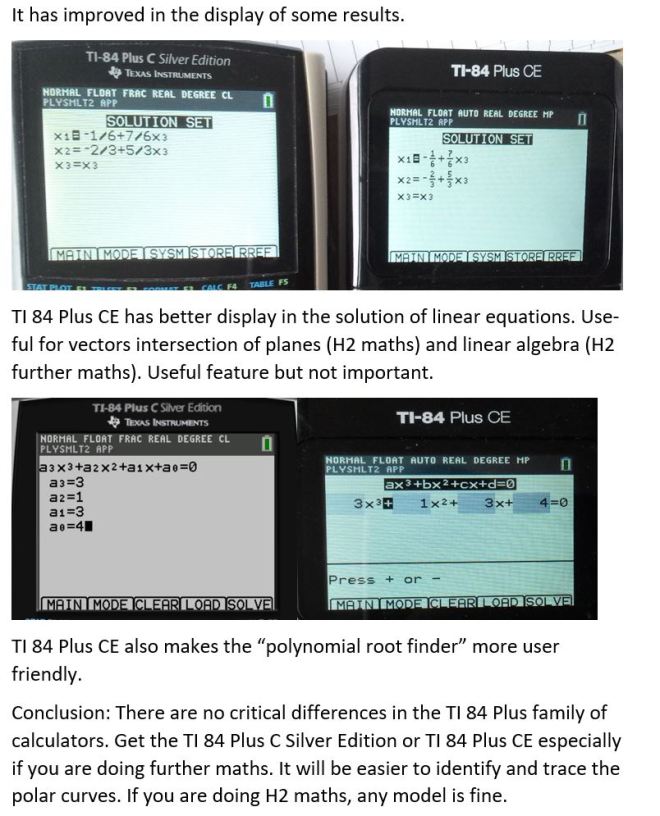
All the functions of TI 84 Plus series of calculators are essentially the same and can be used in Alevel.

approved-calcualtor

1

11

12


Choosing a suitable value for binomial approximation

1

Example 1

2

3

If the expansion is of other forms, can try the method shown in example 2.

Example 2

Suppose you are asked to expand Tex2Img_1396431523 using binomial expansion, then use the results to approximate Tex2Img_1396431669

How do you select a suitable value for the approximation?

Step 1

Make sure the value selected is within the range of values for which the expansion is valid. In this example, the valid range is from -4 to 4.

Step 2

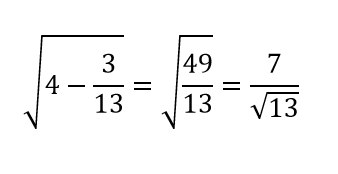
4-x = (13 / perfect square) or (perfect square/13)

So 4-x = (13 /4 or 13/9) or (49/13)

x= 3/13 or 3/4 or 23/9

Choose the smallest value 3/13 as value closer to 0 gives better approximation.

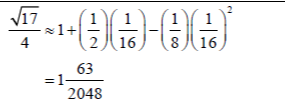
Therefore, Capture

LHS can be approximated using the binomial expansion. Hence Tex2Img_1396431669 can be approximated.

Optimising the graph settings in GC

Suppose we are required to solve the following inequality, given that x is positive

eqn

Using TI-84 Plus (OS 2.55)

adjust graph settings


Using GC to determine the nature of stationary points

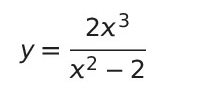
Suppose we are required to determine the nature of stationary points for the following:

y

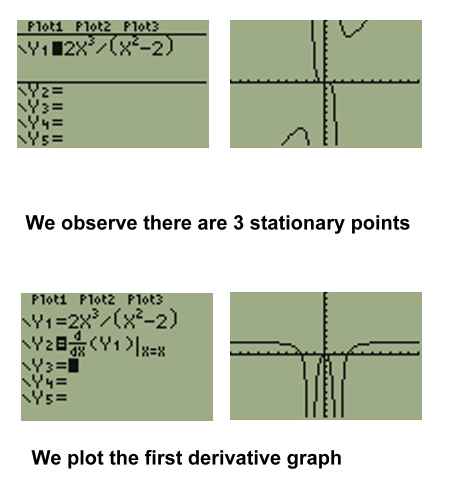
Using TI-84 Plus (OS 2.55) det

Observation of stationary points:

Left stationary point: First derivative changes from +ve to -ve. Therefore, it is a maximum point

Middle stationary point: No change in sign of deriative. Therefore, it is a point of inflexion.

Right stationary point. First derivative changes from -ve to +ve. Therefore, it is a minimum point

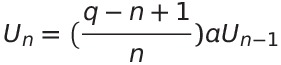
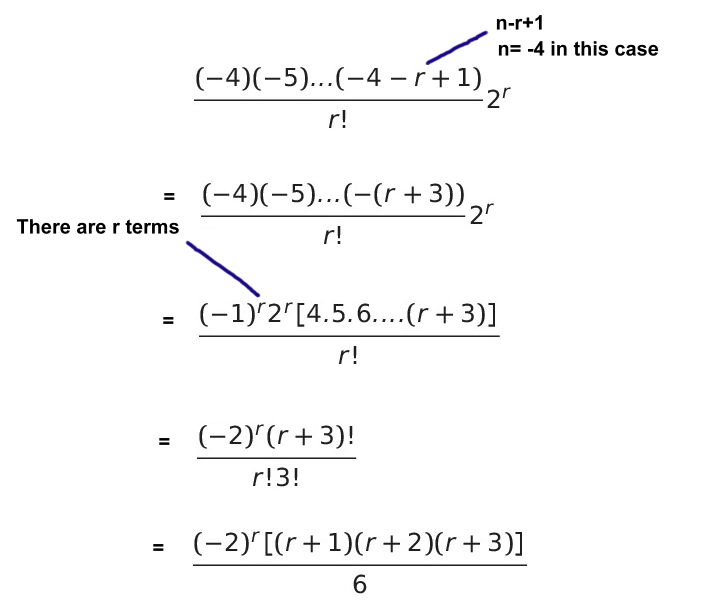
Finding the general term in binomial series

In Amath, finding the general term in binomial expansion is easy, because we can easily evaluate nCr.  However, finding the general term in H2 math can be much more challenging because n can be a fraction or negative integer.

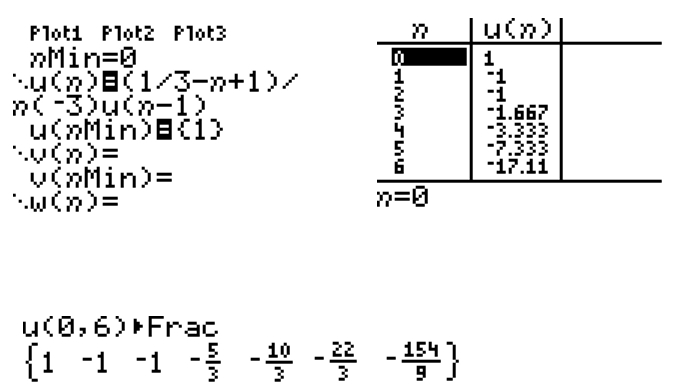
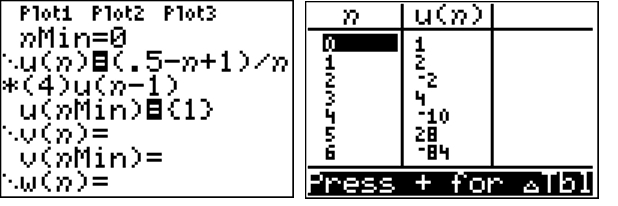
For example

binomial series


binomial series solution


These type of questions have appeared in JC assignments. Fortunately, it has not appeared in A level exam for the past 10 years. Nevertheless, it is still good to learn how to derive the general term 🙂

Taking H2 math (9758) without Amath?

One question often pondered is whether students can take H2 math (9758) without taking Amath in O level.

Not all junior colleges have the same prerequisite for H2 mathSome JCs require a minimum grade in O level Amath, some require a pass and some don’t even require Amath.

Some JCs  allow students without amaths background to take h2 maths but they must do a bridging course.

H2 math is much more challenging than Amath, and there are a lot of assumed knowledge in Amath, especially on Calculus, trigo, surds, indices and logarithm.

If students don’t have Amath background, it will be very challenging to understand and do well in H2 math. My recommendation is for students without Amath to take H1 math.

Inequalities: Use And/OR correctly

Many students use the words “And/Or” indiscriminately in solving inequalities. However, there is a very important difference. ‘And‘ means you take the intersection of the solutions sets. ‘Or‘ means you take the union of the solutions sets.

Example

inequality

Understanding Composite Functions

For the composite function fg,

Understanding composite functionsTo find the range of the composite function, there are 3 approaches

Method 1ex

Method 2 (Only for strictly increasing or decreasing function)

Since both function g and f are strictly increasing, we can deduce the range in the following manner:

composite

Method 3

Determine the range based on the rule and domain of the composite function

Using the same f and g definition above,

Tex2Img_1399597518

Tex2Img_1399597421

Tex2Img_1399597833

Integration made simple

Knowing how to apply Linear Composite Rule and Reverse Composite Rule in integration will make integration very simple. This will save the effort of memorizing lots of integration formulas.

linear-composite

reverse composite